Aashto Vertical Curve K Value Table

Ssd Psd On A Vertical Curve Transportation Engineer Boards
Http Www Dot State Wy Us Files Live Sites Wydot Files Shared Project 20development Road 20design 20manual 1 3 03 2019 May Pdf
Https Www Bexar Org Documentcenter View 6587 Vertical Curves Pdf
Geometric Design Transportation Engineering

3 4 6 Vertical Curves P P You Learned How To Lay Out A Vertical Curve Pvc Pvi And Pvt For Given Grades In Ce113 Surveying And Reviewed Ppt Video Online Download

3 4 6 Vertical Curves P P You Learned How To Lay Out A Vertical Curve Pvc Pvi And Pvt For Given Grades In Ce113 Surveying And Reviewed Ppt Video Online Download

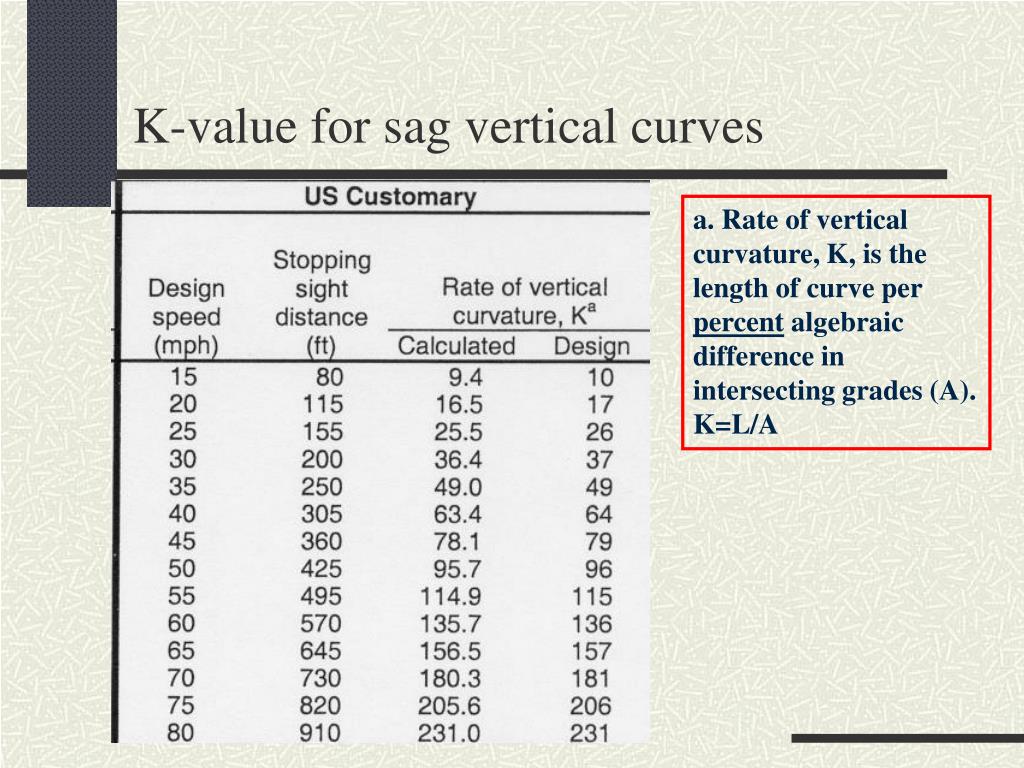
K value for sag vertical curve comfort criteria 3r project.
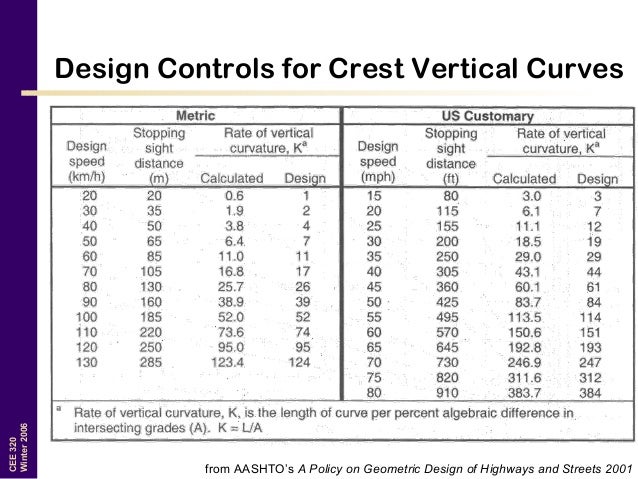
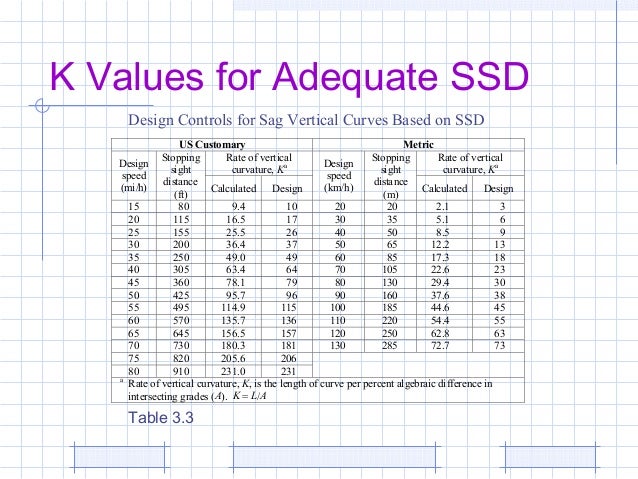
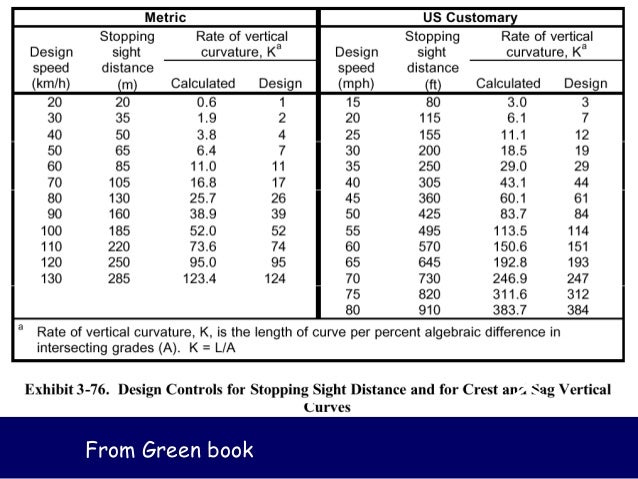
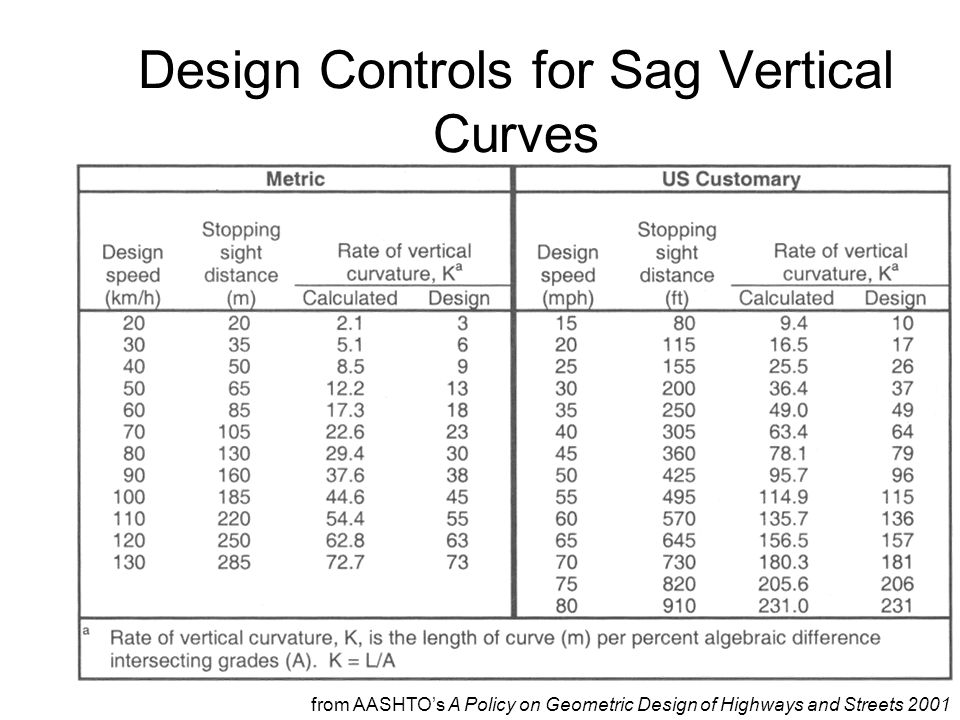
Aashto vertical curve k value table. Table 3 36 of the aashto greenbook is used to determine the length of a sag vertical curve required for any ssd based on change in grade. L length of vertical curve assumed to equal length in plan a change of grade in the k value is effectively an expression for degree of curvature multiplying k by 100 gives the equivalent radius of the vertical curve. The minimum length of vertical curves both crest and sag are expressed as approximately three times the design speed in miles per hour l min 3 v or 0 6 times. Use of small k values is not recommended.
Table 6 1 contains the k values for each combination of road type design speed sight distance. Find the value of k from exhibit 3 72. The stopping sight distance as determined by formula is used as the final control. The resulting sag vertical curves for the recommended stopping sight distances for each design speed are shown in figure 2 7 with the solid lines representing the rounded k values.
S vertical curve and the minimum length of vertical curve for the design speed vcl. In length are used. A crest curve occurs when the arc of the curve is below the vpi. A sag curve occurs when the arc is above the vpi.
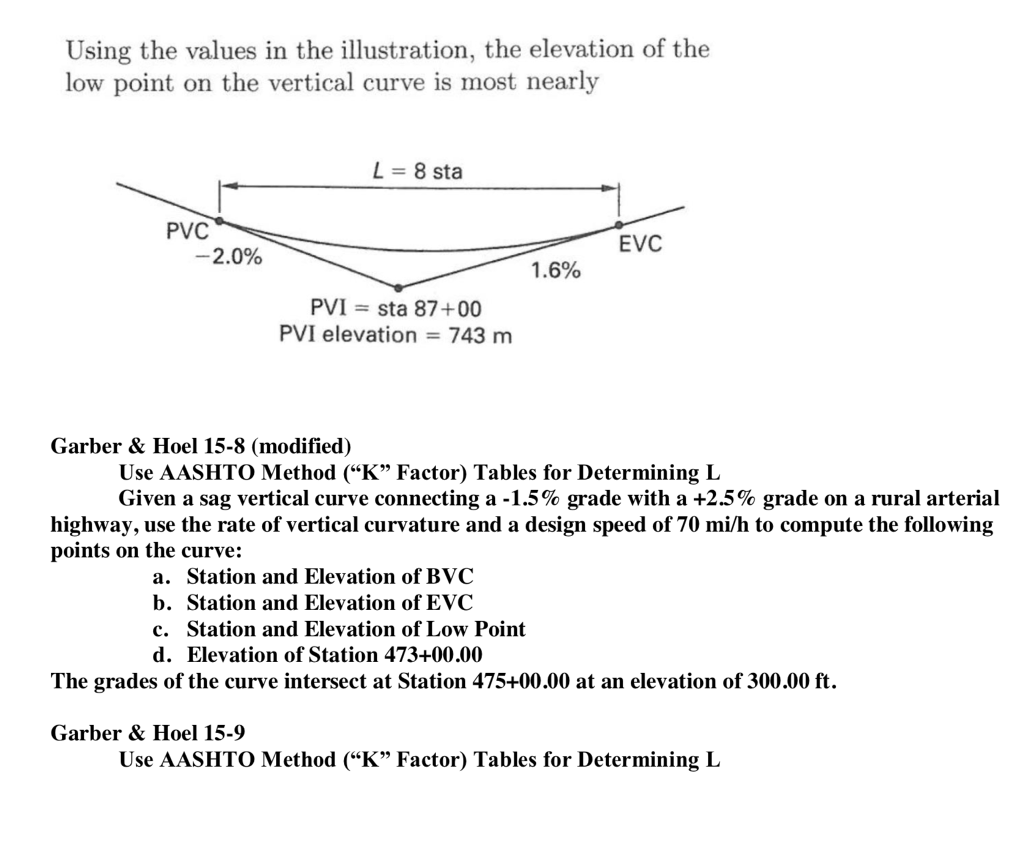
A algebraic difference between grades k horizontal distance required to effect. C and sag k. Speed tables or other design tools often provide a target minimum k value. Knowing that the gradients are 3 uphill and 2 downhill.
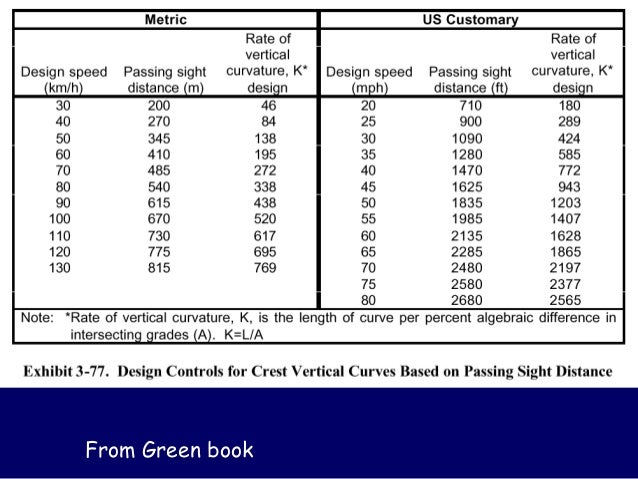
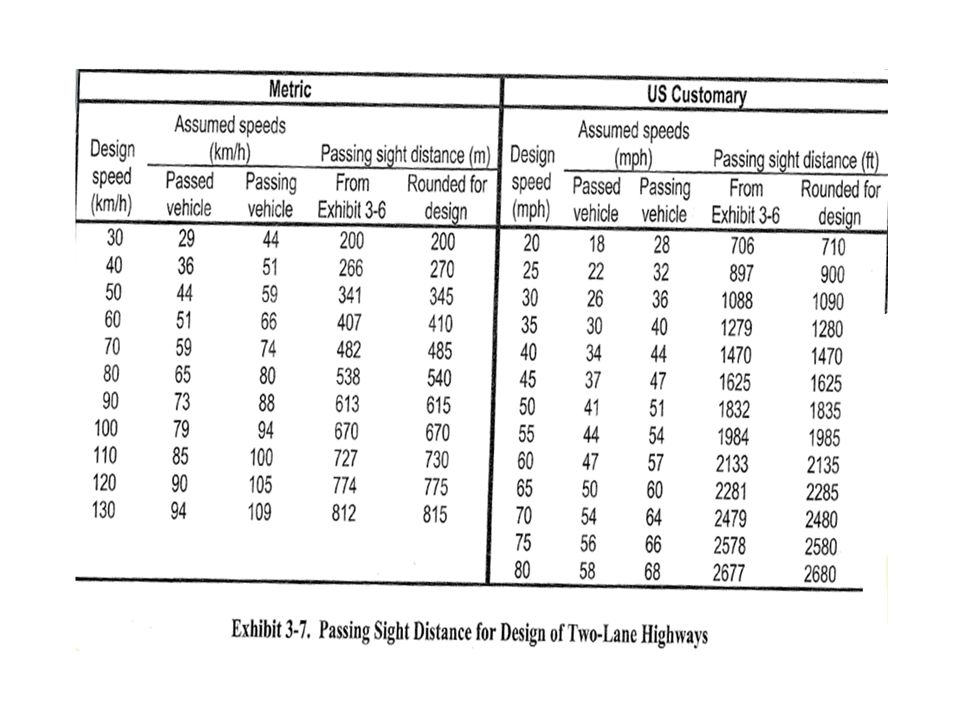
L length of vertical curve ft. This value represents the horizontal distance along which a 1 change in grade occurs on the vertical curve. Page 272 of aashto 2004 for 70mph k 247. Table 2 provides k values for passing sight distance on crest vertical curves for various design speeds.
The high k values in table 2 demonstrate how flat vertical curves need to be to provide passing sight distance. Figure 3 28 aashto greenbook 2011. Critical length of grade for design reference. Typically vertical curves are not designed for provide for passing sight distance because of the cut required to design the curve.
K values needed to produce vertical curves that will provide the required sight distances i e b 1 curve sight distances both for passenger cars and for trucks are generally greater than green book k values used for vertical curve design. Use vertical curves to smooth changes in vertical direction. An engineer is assigned to design a vertical curve for a highway with the design speed is 70 mph. V design speed m ph.
Design speed mph design stopping sight distance ft k. Where practical vertical curves at least 300 ft. Typically vertical curves are symmetrical. A 1 change in gradient.
It expresses the abruptness of the grade change in a single value.
3 Vertical Alignment Of Road By Malyar Talash

About Vertical Curve Design Civil 3d 2017 Autodesk Knowledge Network
Vertical Alignment

Roadway Design Manual Vertical Alignment
Geometric Design It Deals With Visible Elements Of A Highway Ppt Video Online Download
Vertical Alignment
K Value Wikinova
Md Atikul Islam Junior Instractor Dept Of Civil Sub Surveying3 Sub Code 6452 Mob Ppt Download

About Vertical Curve Design Civil 3d 2016 Autodesk Knowledge Network

Roadway Design Manual Vertical Alignment
Solved Using The Values In The Illustration The Elevatio Chegg Com
Ppt Lec 22 Ch 16 Pp 688 704 Vertical Alignment Objectives Powerpoint Presentation Id 6031608

Lec 22 Ch 16 Pp Vertical Alignment Objectives You Learned How To Lay Out A Vertical Curve Given Grades Pvc Pvi And Pvt In Ce113 Surveying Ppt Download
